

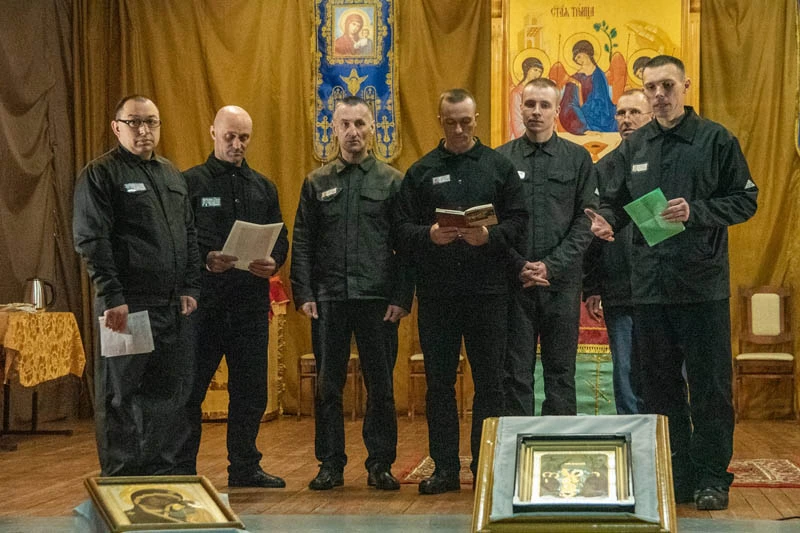
Solidarity continues to discuss (https://gazetaby.com/post/nakolki-chalaveku-xapae-dusheunaj-yomistasci-yon-sprabue-verycz-kab-i-/208640/) with experts why religion has become a persona non grata phenomenon in Belarusian prisons, what one can believe in in a place where no one believes in anything, and how to preserve humanity behind bars. This is the second part of the conversation; the first one, about persecution on religious grounds, can be read here. Now psychologist Volha Vialichka tells us why correctional institutions in Belarus do not correct anyone and how the regime can (or cannot) destroy faith in justice, Belarus, and Belarusians.
“They Entered Prison as Agnostics and Left as Hardcore Atheists”
Former priest with 20 years of experience and former political prisoner Aliaksandr Tarasenka, who was sentenced to two years for an anti-war post, recalled in an interview how he managed to engage other prisoners with a thought:
“Guys, you do understand that Jesus was crucified under a political article — the charge was even written above His head. If this happened today, Christ would have had a yellow tag, tenth preventive registration. And the article would probably be something about seizure of power or treason.”
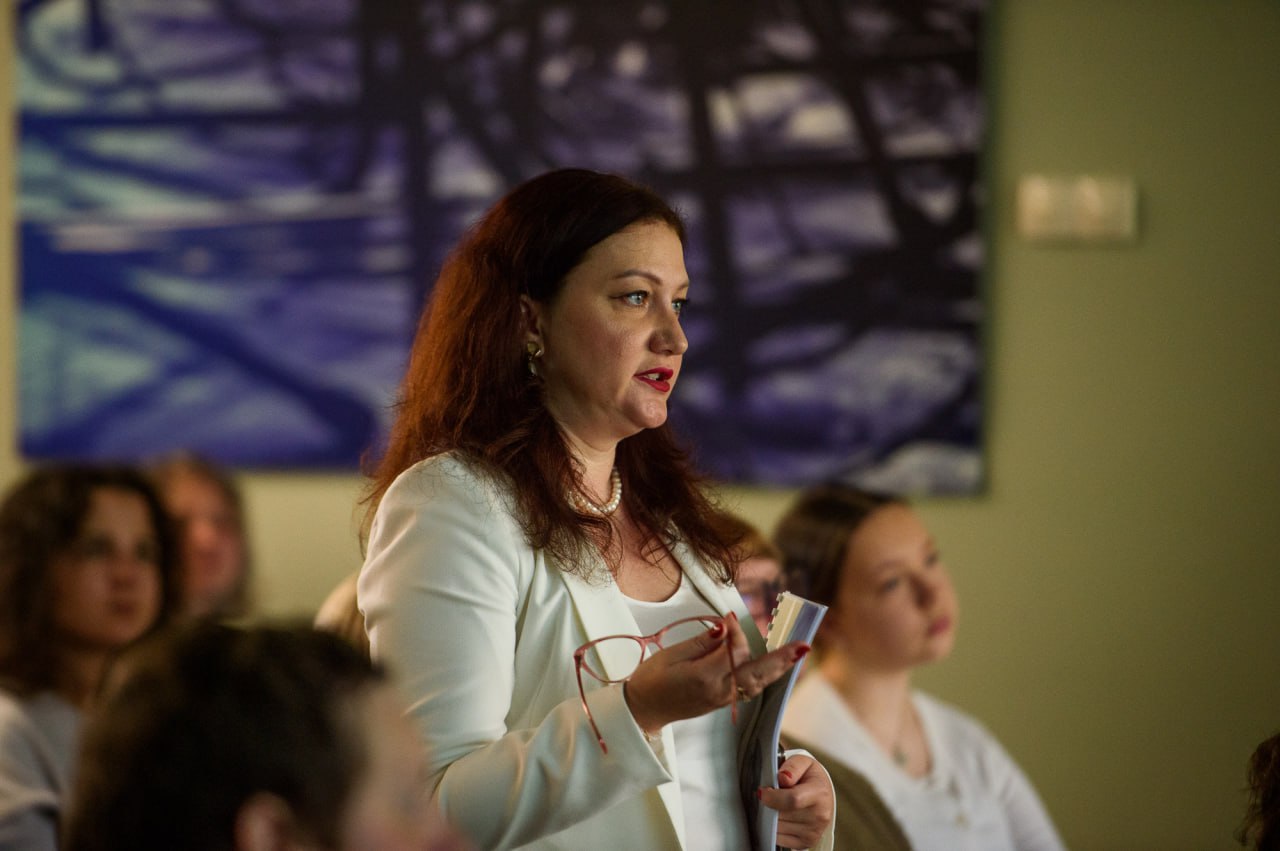
Prison changes one’s view of many things and one’s worldview in general, agrees psychologist and representative of the initiative Doctors for Truth and Justice, Volha Vialichka.
“When we talk about religion, about faith in God, the first thing we think of is justice, love, the possibility of correcting certain mistakes, about sins and repentance,” she reflects. “We begin to pray when we cannot cope on our own, or when situations arise in which we do everything we can, but we do not know how it will end.”
For example, when we are flying on a plane and worrying, or when someone close to us — or we ourselves — is in a severe state of health, fighting cancer.
But when a person ends up behind bars, many reference points collapse.
In a normal country, where there are no political prisoners and none of what we have today, the religious component — the right to religion — must be preserved even in prison. Because it is precisely a corrective element through which a person becomes aware of what they have done. They can repent, correct their inner flaws, and leave prison as someone who has served their sentence and wants to live in society as a normal citizen.
That would be the ideal picture. But in our Belarusian reality, there are two abnormal factors.
The first is that the system of correctional institutions is not designed to correct people. The religious instrument (attending church, speaking with priests) provides some relief, because it gives an opportunity to talk not in prison slang and not about prison topics. But this tool does not function in our system the way it could.
The second factor is political prisoners — people who were imprisoned despite being innocent, who have their own position and critical thinking. In my practice, there were people — both men and women — who entered prison as agnostics and left as hardcore atheists.
The explanation is very simple, the expert tells Solidarity. When those who were not previously inclined toward religion end up in prison and see how other prisoners go to church, confess, and then details of their lives become known to the administration despite the confidentiality of confession — “not only faith in God and justice disappears, but also faith in humanity.” And this negativity remains even after people are released.
On the other hand, “political” prisoners are usually forbidden from going to church or communicating with priests — in order to isolate them even more, to prevent reflection and thoughts about justice, and most importantly, to prevent them from sharing such thoughts with other prisoners.
— Theologian Natallia Vasilevich suggests that even trusted priests are still people from the outside world — who knows what they might tell or pass in and out of prison…
— That is probably true. In Hrodna, there were cases when priests went to pre-trial detention centers and prisons and brought news. And that is normal. But the administration considered it unacceptable, and this possibility was cut off.
“If a Person Believes in Nothing and Hopes for Nothing, That Is a Depressive State”
— You say that many people leave prison as agnostics. Are there opposite cases? Antonina Kavalava recalled that she began to believe precisely in the colony.
— That is also understandable. A human being is a creature that needs to believe in something. It is not so much a psychological issue as a sociocultural one. If a person believes in nothing and hopes for nothing, that is a depressive state. Total disappointment occurs, pre-suicidal thoughts arise — and that is very bad.
As much as a person has psychological and emotional capacity, they try to believe in something, to hope for something — simply in order to continue being in this world, not the other one. Even those prisoners who are thrown into solitary confinement mold little rabbits or spiders out of bread, so as not to remain alone with profound injustice, to share thoughts with them, and to believe that they will endure.
In fact, the religious approach is deeply rooted in our consciousness. Recall: when someone is ill, we wish them “May God grant recovery.” When a child is born, Belarusians say, “May God give them health,” or “May God grant happiness.” This “May God” comes naturally to the tongue.
However, faith in the broad sense is not only about God. People believe in many things. Religion is the most obvious choice because it has existed longer than any state or institution. Empires rise and fall, religion remains.
And faith in people, in one’s country, in justice, in one’s principles, and in resilience also remains. This can be clearly seen in emigration: some, after becoming disappointed, lose faith and switch to other matters — a psychological defense mechanism activates. Others continue doing what they believe in.
Psychology itself is largely built on faith: when everything around a person is bad, a psychologist searches for their strengths to rely on. In the language of priests: “Believe, and according to your faith it shall be granted to you.”
In psychological terms: a person is what they think about themselves. Different words — the same meaning.
“The System Maims and Takes Away Humanity”
In June 2025, when 14 political prisoners were released, some of them said at a press conference that they had been supported by the words of another prisoner — a Catholic, a catechism teacher, Viachaslau Beladzied.
“The main thing is not to let the prison inside you.” This thought is clearly the direct opposite of what prison administrations and staff strive for.
— Is faith exactly what they try to destroy in Belarusian prisons and colonies?
— Yes. Because to take away a person’s belief in their position, you have to take away their belief in themselves, in humanity.
Former political prisoner Palina Sharenda-Panasiyuk told a very telling story. In the colony in Zarechcha, where women serve sentences of 10, 12, or 15 years, there is a single apple tree growing on the territory of Penal Colony No. 24. Apples ripened on it — red, large. And the head of the colony ordered them to be shaken down, collected into bathtubs, and… poured over with chlorine. Not simply thrown away, because someone would have taken them from the trash (apples are almost never delivered to the colony). But destroyed.
The same happens to people. The main “corrective” element of this prison system is to take away faith in the human. Then a person turns into an animal that simply obeys orders: “Sit,” “Sit and be silent,” “Ask for nothing and give nothing,” “Do what you are told,” “Think what you are told.” Religion only interferes in this process, because it provides grounds for thinking, rather than simply being a “sheep of God.”
“Political” prisoners, unlike most inmates, know that they are imprisoned unjustly, so they do not become dehumanized or brutalized. And this is truly a form of salvation. Although there are many examples of political prisoners being broken as well.
We speak little about it, but the system of informing thrives in prisons. People are convinced that they will never get out, and they submit to these rules, losing faith and hope.
And ordinary prisoners, deprived of freedom for other crimes, leave without humanity, without belief and dignity. That is why they go back to stealing and killing again — because the system maims them, takes away their humanity, and makes them dangerous. And I believe the system understands what it is doing — it does not seem like it happens intuitively.
And this is a very large-scale and serious problem.
Machine translation from Belarusian.