
Resocialization is one of the key official goals of the modern penitentiary system in Belarus. In practice, however, strict limitations on prisoners’ communication with the outside world lead to the exact opposite. Severing contacts with family and keeping inmates in informational isolation prevents the formation of conditions necessary for a person’s successful reintegration into society.
We spoke with former political prisoner Olga (name changed) and “Viasna” human rights defender and former political prisoner Marfa Rabkova. They shared how communication with relatives was maintained in Penal Colony No. 4 in Homieĺ.
The Weakening of Family Ties as a Factor of Desocialization
Modern penitentiary criminology confirms that strong, stable family ties are the primary protective factor in reducing the risk of reoffending. Practices such as blocking correspondence, restricting letters strictly to immediate family members, and “losing” mail destroy the prisoner’s supporting network. Numbering letters and forced control measures on the part of families only serve to emphasize the artificiality of these communication conditions.
For Marfa, communicating with family during incarceration and maintaining social ties were among the most painful issues—ones that, as a human rights defender, she analyzed in detail from within the prison system. She criticizes the penitentiary system for its punitive approach to inmates’ social contacts. Marfa emphasizes that connection with relatives is the single main factor capable of rehabilitating a person and helping them return to a normal society; yet, the system does everything to destroy this bond.
“I don’t understand why they do this. Why do they think that cutting off social ties is a good thing? I’m not just talking about Category 10 right now; I mean people in general. It seems to me that social ties—connection with relatives—are precisely what can rehabilitate a person,” reflects Marfa Rabkova.
According to the human rights defender’s observations, phone calls in the colony are artificially turned into a privilege, and strict limits on them are weaponized by the administration as a punitive tool. Marfa notes that corresponding or having rare meetings with anyone who is not an immediate relative (even close lifelong friends, neighbors, or simply caring individuals) is practically impossible.
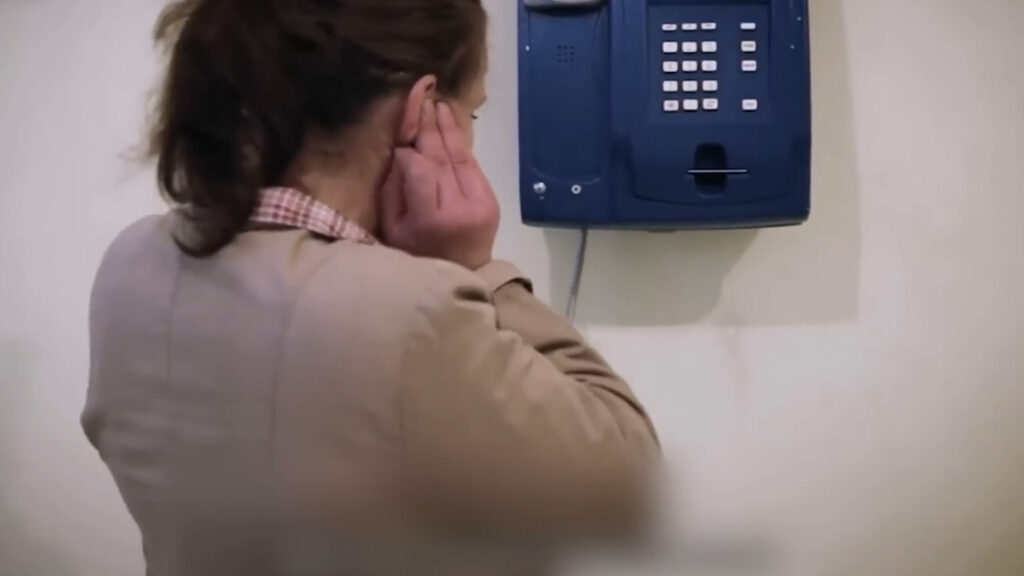
Restrictions on short- and long-term visits have a similarly destructive effect. An inconvenient notification schedule (notice given just 1–2 days prior), visits conducted through glass via a telephone receiver, and strict quotas on the number of extended visits lead to the breakdown of interpersonal contacts. For those whose relatives live in distant regions or cannot travel at short notice, this results in years of isolation from loved ones.
“Getting a visit was like winning a major lottery. Usually, on the 28th or 29th, they tell you that your visit is on the 1st. They do it so you don’t even have a chance to write a letter, and your relatives don’t have time to receive it and come see you,” recalls Olga.
In this way, while the colony leadership did not formally deny visits, they effectively deprived prisoners of the opportunity to see their families.
Watching TV with a 40°C Fever
Successful reintegration after release requires a person to be aware of current societal developments. However, access to information in penitentiary institutions is severely restricted.
“We lived in an information vacuum. We were only allowed to watch TV at scheduled times. Their TV channel, Vektor, which they showed us, was—naturally—pure propaganda,” shares Olga.
Watching Vektor was a mandatory element of the prison regime. Olga recalls how, even when she fell gravely ill with a fever near 40°C (104°F), weakness, and severe sweating, the administration still forced her to sit in the unit in front of the screen and watch those broadcasts.