





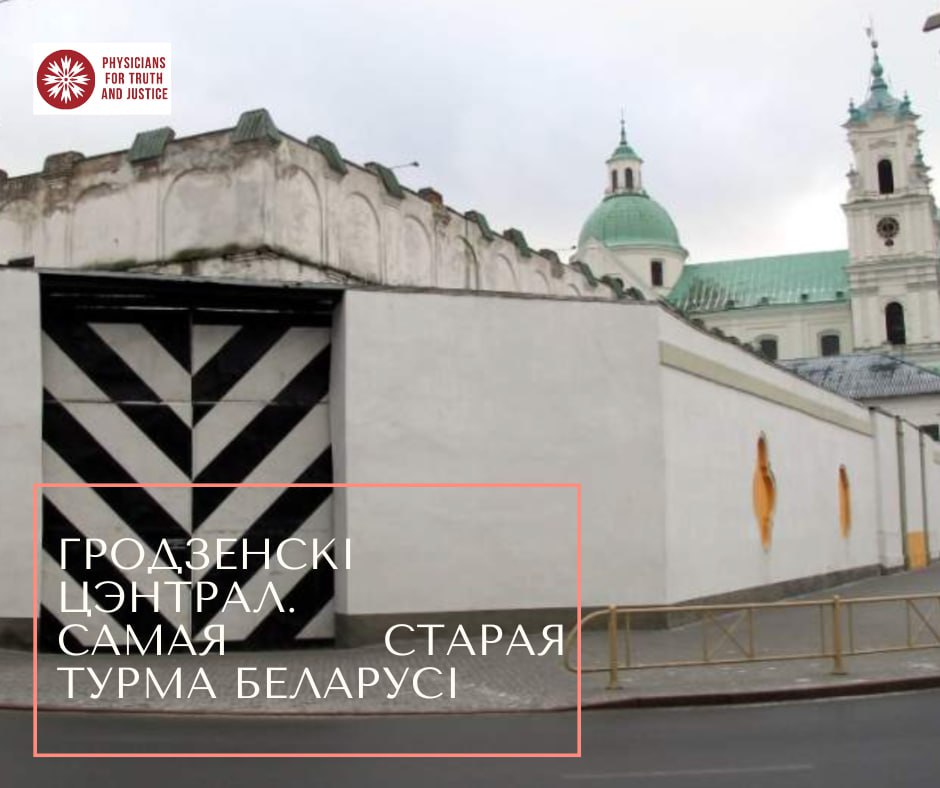
The history of the oldest prison in Belarus begins on August 4, 1811.
On that day, a prison was established in Hrodna, which later became known as Hrodna Central Prison. Initially, it served as a transit prison for nobles and criminal offenders. Over more than two centuries, it has witnessed changes of власти, wars, and repression. Both criminal and political prisoners of different eras were held there — from 19th-century insurgents to today’s political prisoners.
During the Nazi occupation, this place became a real “factory of death”: thousands of people were executed without trial in the prison’s inner courtyard.
🧩 Why is this important?
Throughout its history, Hrodna Central Prison has seen many different eras — from Tsarist repression to Nazi occupation and the present-day regime of repression.
Today, this place is a symbol of the tragic continuity of repressive practices in Belarus.
More than 1,200 political prisoners are being held in prisons, many of them subjected to solitary confinement and arbitrary charges.
Machine translation from Belarusian.