




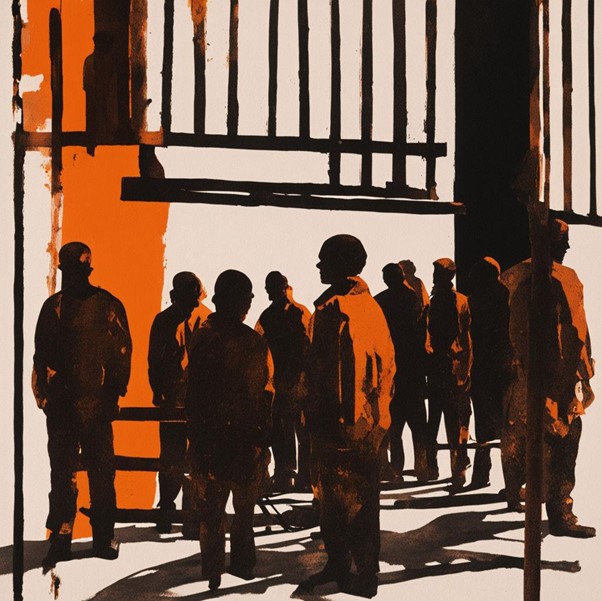
Places of deprivation of liberty (PDL) are by nature closed institutions, located far from the public eye, strictly controlled, and largely representing a single-gender environment. On a daily basis, they exercise authoritative control over prisoners who are held there against their will and who may have experienced acts of violence and social problems prior to incarceration.
In theory, due to the heightened control always present in PDL institutions, measures to prevent various forms of violence — both from the administration and from prisoners themselves — should be more effective than in society at large. However, in real life within closed correctional institutions, management methods, the dominant culture and subcultures (in some countries defined as “caste-based systems”), existing among detainees and prisoners, may contribute either to the spread of violence or, conversely, to its reduction — depending on whether they foster respect or allow violence.
Factors contributing to the presence of violence in closed institutions include the “specific features of the social and physical environment” in these facilities (prisons, etc.), reflecting individual characteristics of prisoners, structural and situational features of the institution itself (such as architectural design and security levels), management practices (staff selection and training, leadership style), and even external influences (for example, political problems in the country).
In some cases, prison leadership effectively relinquishes control to prisoner self-governance structures or other informal hierarchical systems that introduce unwritten codes of conduct (as happens, for example, in some correctional facilities in the Russian Federation and Georgia). Such prison subcultures exploit weaker prisoners and use violence against those who violate unwritten behavioral rules. The organization of prison gangs or группировки for self-defense may indicate that the administration does not control the monopoly on violence.
In closed institutions, prisoners may be subjected to violence by other prisoners for the purposes of punishment, демонстрации силы and control, intimidation, coercion, or deprivation of rights and opportunities for an individual or an entire group.
Sexual and gender-based violence (SGBV) is an extreme form of discrimination and a gross violation of human rights. It may affect a wide range of rights, including the right to life, freedom, personal security, and the right to be free from torture and other cruel, inhuman, or degrading treatment or punishment. Cases of SGBV threaten the health, dignity, safety, and autonomy of victims, yet in most instances they are ignored and not documented — especially when they occur outside the view of the public.
This document provides examples of violations of prisoners’ rights related to psychological, physical, and sexual harassment/violence, as well as the disclosure of confidential information in places of forced detention in several European countries, drawn from key judgments of the European Court of Human Rights (Russia, Georgia, Latvia, Moldova).
The expert outlines measures aimed at changing and eliminating prison subcultures in a number of countries. These include political instruments for preventing and suppressing all forms of violence, professional actions for its prevention, as well as practical initiatives undertaken by отдельные correctional institutions and civil society.
Examples of initiatives from different countries are presented in this publication to illustrate various approaches to the problem of caste-based systems and the violence associated with them in places of deprivation of liberty. The selection of examples is based on assessments contained in OSCE/ODIHR questionnaire responses, indicating the effectiveness of these initiatives in specific countries. The publication also includes information obtained by the expert during a visit to a high-security prison in Norway while preparing this work.
The final section contains brief conclusions and recommendations for staff of Belarusian penitentiary institutions on improving the situation related to prison subculture and the resulting psychological, physical, and sexual violence in places of detention in the Republic of Belarus.
The author notes that this topic is highly complex and requires thorough expert analysis. It cannot be fully covered within the scope of this document, which represents one of the first attempts by Belarusian human rights defenders to raise the issue of caste-based prison subcultures and related violence in PDL institutions of different countries (including Belarus).
The full text of the expert’s work can be accessed and downloaded here (available only in Russian): https://doctorsby.com/ru/2024/08/19/13142/
Machine translation from Russian.