

We continue cooperating with independent media outlets that write about the rights of prisoners in Belarus.
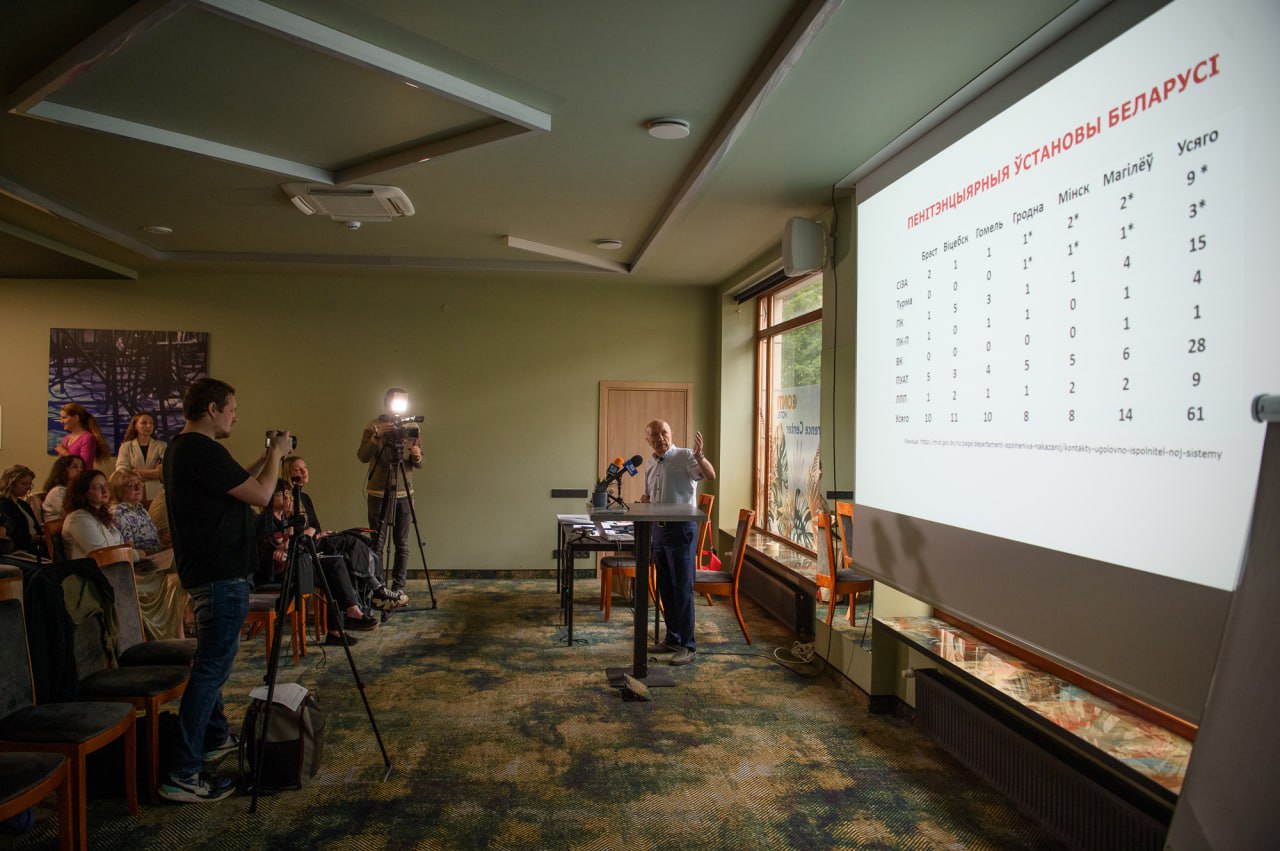
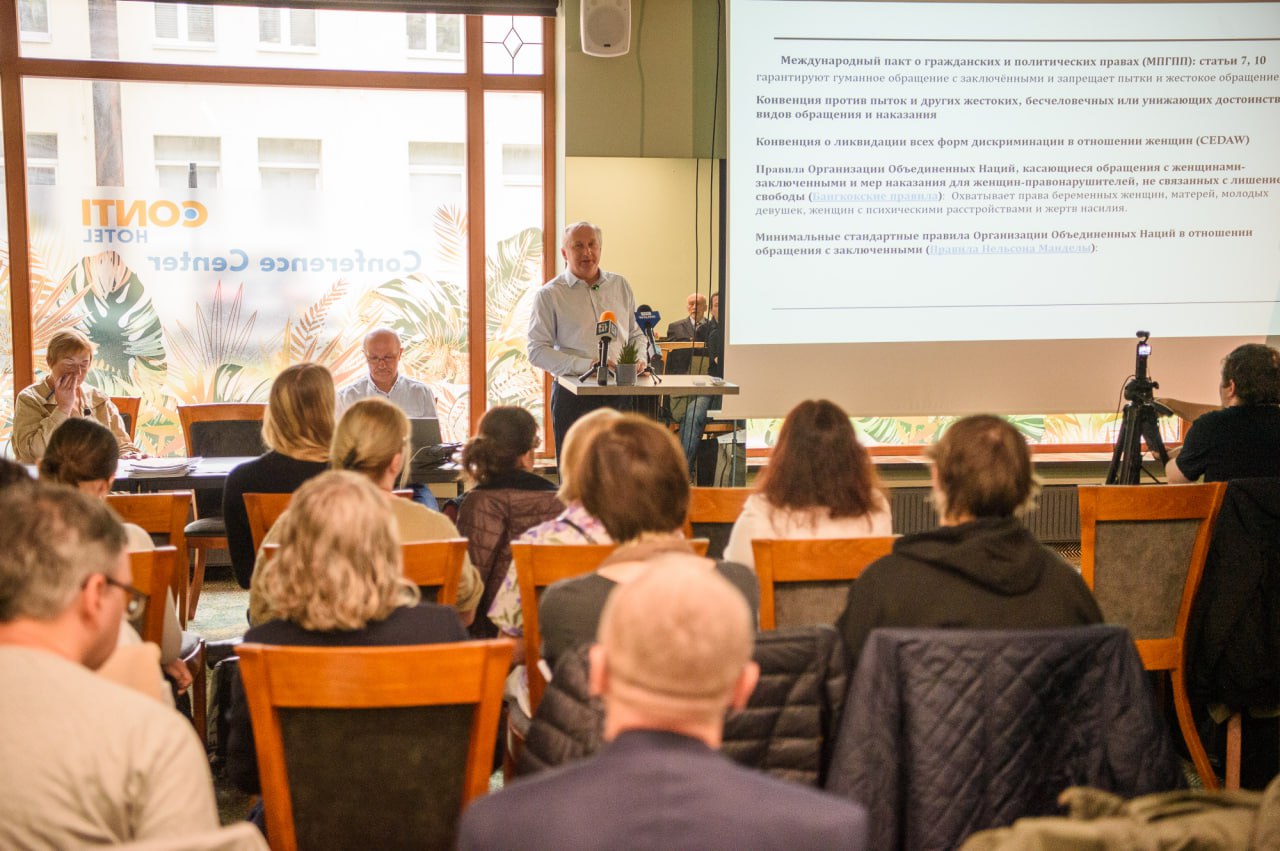
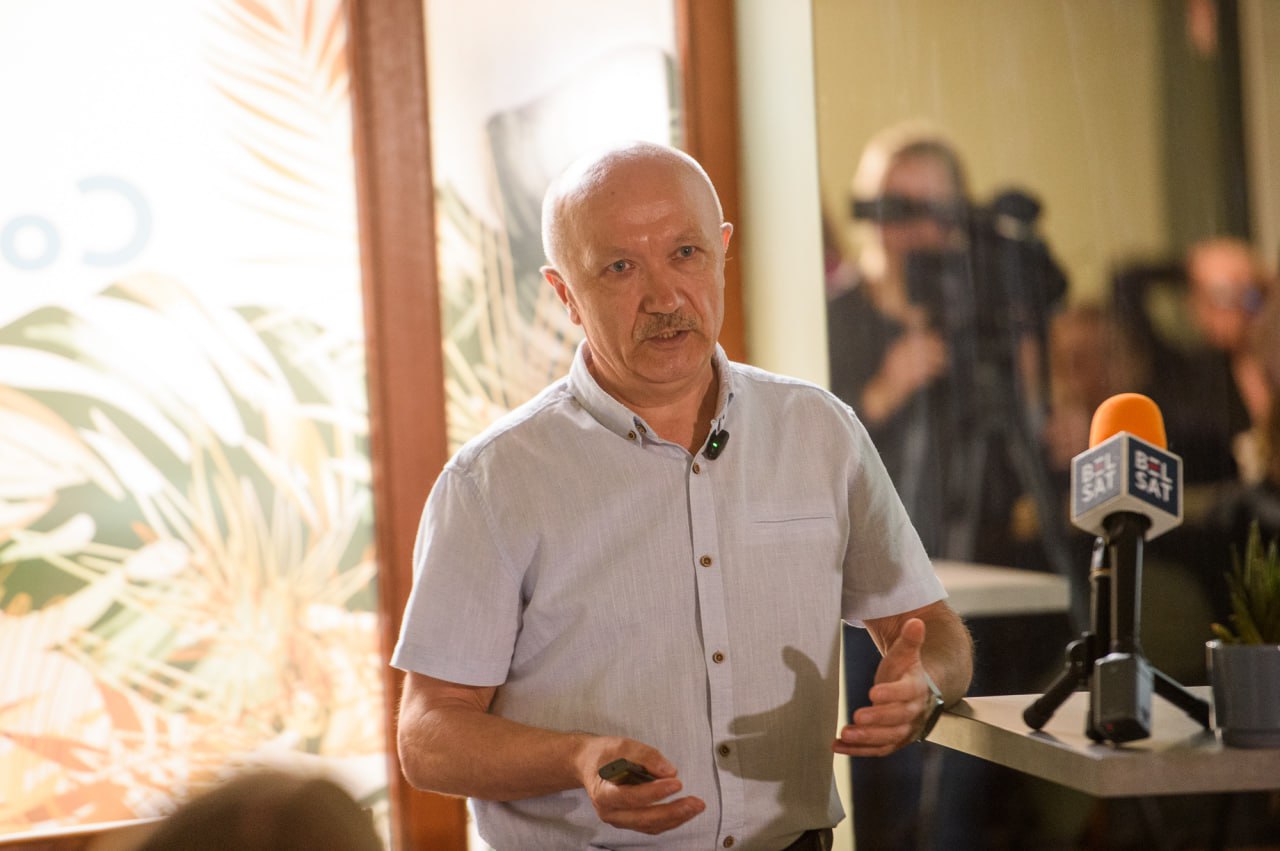
This time, Vasili Zavadski spoke with a correspondent from Solidarity about particularly vulnerable groups of prisoners — people with disabilities and older people.
“You can’t prescribe every single point. But there are things that cannot be called anything other than abuse.” Solidarity spoke with human rights defender and doctor Vasili Zavadski about the situation of political prisoners with disabilities and serious illnesses — and about what “improved conditions” look like in reality.
People with mental disorders and physical limitations end up in Belarusian prisons just like everyone else. And political prisoners are sent there with no regard whatsoever for their health condition — sometimes directly from an oncology clinic. For which categories of prisoners should “improved living conditions” be created — and what does that look like in practice?
How people with disabilities and serious illnesses become additionally vulnerable in captivity, and what kind of help prison staff do (not) provide them, Solidarity discussed with the former head of the medical service of the Department for the Execution of Sentences of the Ministry of Internal Affairs of Belarus, human rights defender, and representative of the initiative “Doctors for Truth and Justice,” Vasily Zavadski.
The problem, Mr. Vasili notes, has existed not for years but for decades — yet in a certain sense, “thanks” to the unprecedented number of political prisoners, it has become truly visible and attracted significant attention. And this is important, because what is written in Belarusian laws and what happens in practice are two very different things. And both are far from normal.
“Indeed, the Penal Enforcement Code states that special conditions are created for people with disabilities. I am not aware of any additional instructions on this matter — I don’t think they exist. That means that each institution interprets the creation of such conditions in its own way,” says Vasili Zavadski.
Thus, for people with Group I–II disabilities, improved nutrition is предусмотрено — it is called “dietary,” although it is not really so, but the meals are more varied. And in practice, the “conditions” mean that everyone who does not work in the colonies (pensioners, prisoners with Group I–II disabilities) are held in separate units where the beds are not bunk beds, and the floor is the first floor.
“But that is, so to speak, the good will of the administration, not a mandatory rule. Because usually there are not many such people — although when I worked in Novosady, there were about 60 non-working prisoners. And the special conditions for them usually consisted of being on the first floor, and of less strict requirements: for example, when the unit goes to the dining hall or to the bathhouse, it is not necessary to march in formation.”
Ideally, the medical and social conditions for prisoners should be the same as for ordinary people in freedom. Nowhere is it written that they are deprived of their benefits. But in reality, that does not happen.
Conditionally speaking, some categories of people with disabilities are entitled to a sanatorium at least once a year — logic suggests that no one will send a prisoner there.
And yet, special treatment for such people must be spelled out. At the very least, medical-social and rehabilitation services obviously must be provided to them, and this should be regulated by an appropriate normative document.
Today, however, there are people with disabilities in the colonies, but there is no social worker. There is one position — it used to be called an “engineer for social and бытовое arrangement,” but there is only one person for the entire colony, and they deal with everyone who is being released. Physically, they cannot give attention to everyone.
It should be noted that in the West, social workers — compared to Belarus — are quite a numerous category of people working in places of deprivation of liberty.
“If a prisoner’s health has significantly worsened in detention (for example, it is known that Vatslav Areshka almost lost his eyesight, and many prisoners have had chronic illnesses worsen) — are the medical staff there required to formalize disability status?”
“Yes, they are. Of course, in colonies it is not that simple. Arranging consultations with specialists, organizing additional examinations — all of that is extra work that the medical unit staff do not really like doing. But they do it, and there is already an established system.”
In addition, there is a mechanism for release due to health condition. The instruction, to be honest, lists illnesses in terminal стадии — for example, oncology of the 4th clinical group and other extremely severe conditions. But even loss of eyesight can be grounds for release due to health condition.
And colony staff themselves are interested in such people being released, because a prisoner who фактически cannot take care of themselves is an additional burden for them. And if the prisoner does not qualify for release due to health, other options can be sought: for example, assisting with parole, amnesty, or transfer to a lighter form of punishment (“home chemistry”).
Previously, this sometimes worked. Today, I think they are simply afraid to use such mechanisms, because it draws additional attention to political prisoners.
…Former prisoners told Solidarity things that are difficult to explain — for example, a ban on people with poor eyesight wearing contact lenses.
Human rights defenders from Viasna learned that journalist Oleg Suprunyuk, who has a hearing disability, is not allowed to use a hearing aid, and that some prisoners are not allowed to receive жизненно necessary medications, in particular for diabetes.
Human rights defender Leanid Sudalenka described how, in a punishment cell (SHIZO), he was forbidden to have his glasses — and without them he could not even read the internal rules (which, of course, did not concern anyone). A Belarusian woman from Mazyr was detained прямо at the exit from an oncology clinic, and now she is postponing a necessary operation while waiting for trial.
And such cases are not one or two — it seems to be part of a systemic attitude toward “political” prisoners. Which leads to the question:
“How should we assess the actions of those staff members who know about a person’s disability and serious health problems that arose or worsened in detention — and do not provide the necessary assistance?”
“Objectively, this inhuman treatment should be assessed as torture. And this is not my emotional reaction — it is written in an international covenant signed, among others, by Belarus.
This is a crime for which конкретные officials will have to answer. I have no doubt about that.
You can’t prescribe every point in all normative documents, but there are things that cannot be called anything other than abuse. The same goes for when prisoners have their pencils and pens taken away and are told: ‘Write complaints.’
Such an inhuman penitentiary system is not merely a reflection of what happens in society — it is a concentrated imprint of it.
But I repeat: perpetrators and participants in torture not only may be held accountable — they will be held accountable. And they must know this.”
Machine translation from Belarusian.