

Today, when thousands of political prisoners are held in Belarusian prisons, and dozens of them are being released, expelled from the country, and sharing accounts of the harsh, often inhumane conditions in the country’s penitentiary institutions, this topic occupies center stage in public attention. However, whether intentionally or unintentionally, the fate of tens of thousands of “ordinary,” non-political prisoners continues to slip from our view—under what conditions do they serve their sentences? What is the system doing to help these people properly reintegrate into society after their release from prison? If it is doing anything at all, how effective are these measures and efforts?
Belarusian law enforcement agencies traditionally do not publish statistics that would allow for an objective assessment of the quality and effectiveness of their work. The last available official data on recidivism rates were contained in Belstat’s 2015 statistical yearbook “Offenses in the Republic of Belarus,” which provided information for 2014 on specific types of crimes and the proportion of repeat offenders among identified lawbreakers. Since then, recidivism statistics have effectively vanished from the public domain, and government agencies confine themselves to isolated, fragmented statements about a “reduction in repeat offenses” without publishing specific data. Nevertheless, some figures can be found in research publications. For instance, M. Andreasyan, a master’s student at P.M. Masherov Vitebsk State University, in the article “Recidivism in the Republic of Belarus: Trends and Determinants,” mentions that “…court statistics indicate an even higher share (up to 40%) of previously convicted individuals among those sentenced to criminal punishment annually” (implicitly referring to data for 2023).
Why It Is Harder for Women
Returning to society is a complex process for everyone, but for women, it carries its own, even more acute specificities. Former female prisoners face not only standard problems but also purely gender-based barriers:
- severe social stigmatization;
- specific health issues;
- loss of family ties;
- a high risk of becoming dependent on a dangerous environment;
- lack of housing and employment.
At the same time, the problem itself remains invisible. Up-to-date, open information regarding the situation of women within the Belarusian penitentiary system and after their release simply does not exist. The most recent data on the demographics of prisoners dates back to 2018. According to available estimates, women make up about one-tenth of the total number of convicted individuals. However, how many of them are released each year and what exactly their needs are remains unknown.
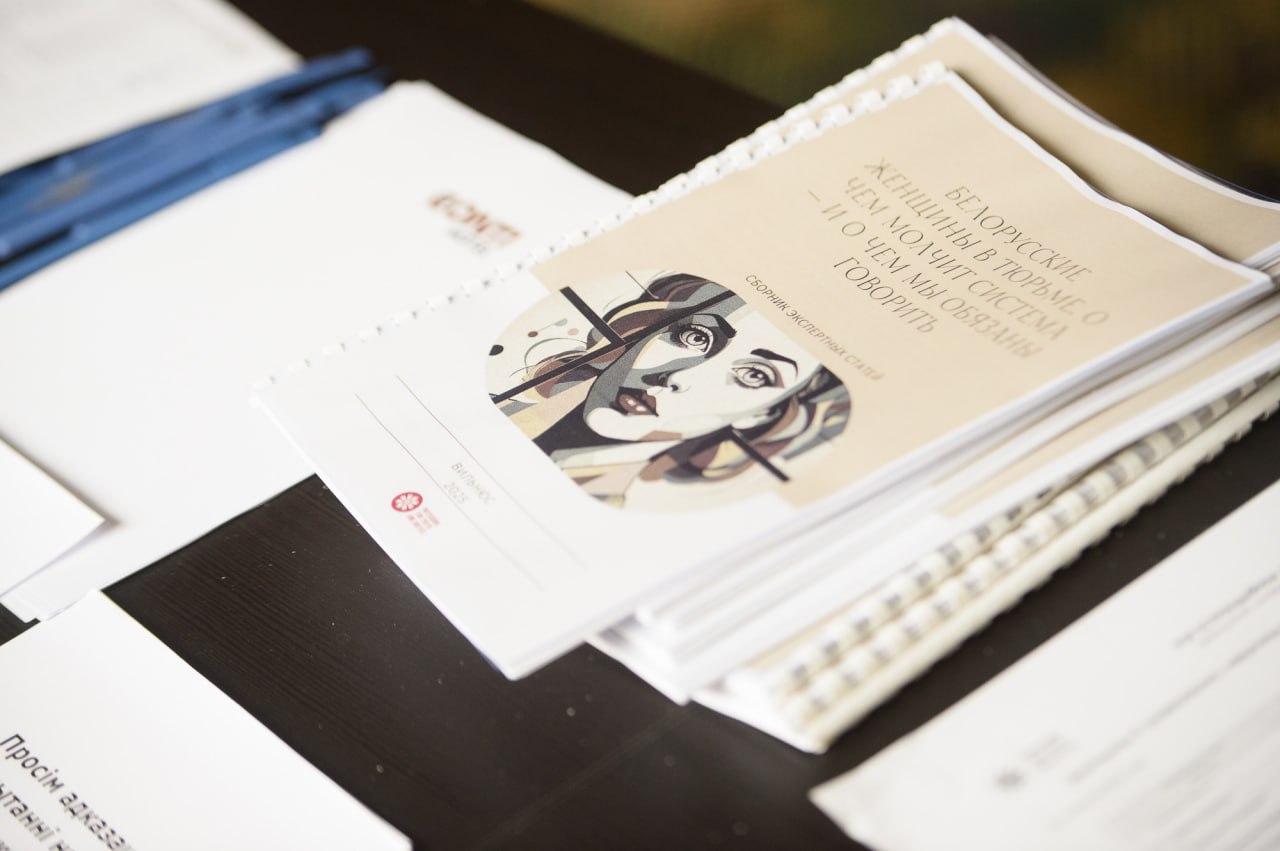
We have planned a series of publications on the resocialization of former prisoners in Belarus. In these materials, we will analyze the problems women face after prison, where they seek help, and why state support often fails at the most critical moment. We want to show more than just systemic failures; we want to present real stories and pathways out of crisis. The main goal is to bring this topic back from the periphery of public attention.
Rehabilitation Begins Behind Barbed Wire
Reintegration assistance is not a charitable add-on to a prison sentence, but a fundamental mechanism of public safety. Women return from prison colonies into a concrete reality: they need a place to live, to re-issue their documents, to look for a job, to tend to their health, and to rebuild relationships with loved ones. If they are left alone at this moment, the risk of relapsing and committing a new crime becomes not just a personal drama, but a predictable failure of state social policy.
Research by psychiatrist and human rights defender Vasily Zavadsky emphasizes that this process must be aimed at restoring lost social functions and life skills among people.
Moreover, this work should not begin on the day of release by then, it is already too late. Over the years spent in a colony, a person loses their autonomy. The daily routine, food, work, everyday life everything is decided for them. As a result, the person who steps out into freedom is often not a “reformed citizen,” but someone who needs to re-learn basic everyday tasks. Genuine preparation must take place while still in the correctional facility: through education, vocational training, psychological support, and maintaining family ties, rather than through formal coercion.
Work, Housing, and Bureaucracy
Employment is a distinct problem. Having a job is the primary factor that prevents recidivism. Yet, labor in prison colonies rarely fulfills this function. If work is perceived as demeaning, meaningless, and goes almost unpaid, it only deepens alienation. People need a profession that is in demand on the job market on the outside, transparent pay, and the understanding that legal earnings are the foundation of independence.
Basic necessities are no less crucial: housing, documents, and initial material assistance. For a woman who has just left a colony, the absence of a passport or registration becomes an insurmountable wall. Without documents, it is impossible to apply for benefits, get a job, or see a doctor.
Practice shows that almost all released individuals are in dire need of psychological support. Many suffer from addictions which, under stressful conditions, quickly drag them back into a criminal or marginalized environment.
Furthermore, the fact that support services exist “on paper” does not mean they are accessible. Upon release, a woman is often disoriented, lacking money, connections, and an understanding of how to navigate bureaucratic circles. Consequently, the support system frequently proves inaccessible precisely during the first days and weeks when it is needed most. This is the period of highest risk: homelessness, a return to domestic violence, illegal employment, and, as a result, a new prison sentence.
What Needs to Change?
Assistance for women must be comprehensive and strictly practical. It should consist of clear steps:
- individualized case management;
- legal assistance in restoring documents;
- access to doctors and psychologists;
- real assistance in finding employment;
- provision of basic necessities (clothing, footwear);
- provision of temporary housing.
What is required is not one-off charity, but a functioning pathway for a person’s return to a normal life. Supporting former prisoners is an investment in collective safety. Society can choose to keep seeing these women solely as a threat, pushing them back to the margins. But there is another path—a demanding yet humane system where punishment for a crime does not strip away the right to rehabilitation. The faster the state and society help a woman adapt to life in freedom, the less chance there is that she will end up behind bars again.
This is a machine translation from Belarusian